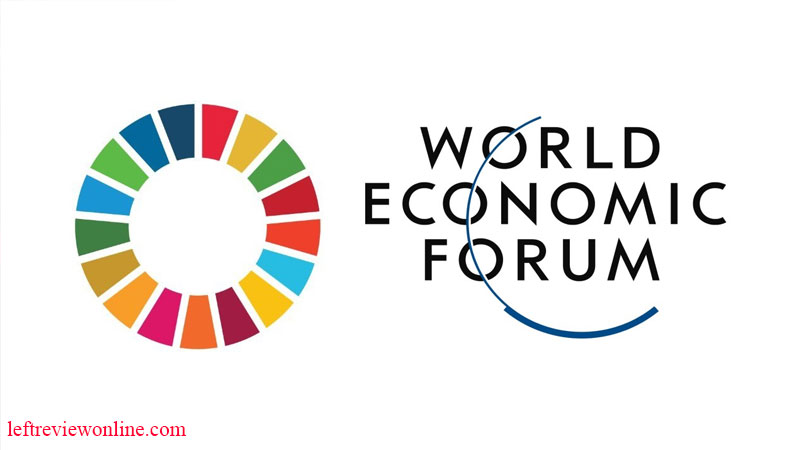
We, civil society organizations, grassroots groups and advocates for the welfare of marginalized sectors, call for the revocation of the 2019 Strategic Partnership between the United Nations (UN) and the World Economic Forum (WEF) and its implications for the 2030 Agenda for Sustainable Development.
We express our grave concerns with regard to the WEF’s opportunism in attempting to influence the processes and outcome of the 2021 World Food Systems Summit (WFSS) through this partnership. The WEF – an organized global platform in which the world’s corporate giants, plutocrats and heads of states converge to promote the corporate agenda in the guise of “improving the state of the world” – aims to cement its dictate through the recalibration of our food systems and agriculture. By positioning themselves as indispensable actors in accelerating the implementation of the Sustainable Development Goals, they are, in reality, attempting to further their own interests in amassing super profits. A clear indication of this is their financing of the 2030 Agenda as the first area of focus specified in the UN-WEF strategic partnership framework and the appointment of an agribusiness representative as the Special Envoy for the Summit.
We reject this corporate hijacking of the 2021 WFSS. The WEF will exploit the Summit to streamline neoliberal globalization, which it has espoused for the past 50 years. It is the perfect venue to push for the role of “Fourth Industrial Revolution technologies” to transform food systems, which the WEF has been championing since 2017. A corporate-led WFSS would be a great advantage to the political elites and corporate billionaires, enabling them to pose hypocritically as responsible entities that promote healthier diets and climate action.
We, therefore, urge the UN to rescind the involvement of the WEF in the WFSS. We recognize the Summit’s potential for decisively addressing the structural issues hounding our food systems and agriculture, but the change we envision is impossible to achieve so long as the WEF is involved. It would mean that global inequality and corporate monopoly would be sidetracked rather than confronted as the root causes of perennial hunger, malnutrition and extreme poverty in the world.
Lastly, we appeal for inclusivity. The sidelined and marginalized sectors in society – the poor farmers, workers, Indigenous Peoples, herders, pastoralists, fisherfolks, urban poor, women, Dalits, and youth – should replace these corporate moguls in shaping the Summit’s proceedings and reforms. Their demands, interests and welfare should set the tone and direction of the Summit’s declarations. People’s rights should take center stage in the 2021 WFSS.
For a truly inclusive transformation of food systems!
Signatories:
Global
1. People’s Coaliton on Food Sovereignty (PCFS)
2. Global Forest Coalition
3. International Indigenous Peoples Movement for Self
4. Determination and Liberation (IPMSDL)
5. International Movement of Catholic Agricultural and Rural Youth (MIJARC)
6. Youth for Food Sovereignty
International
1. Dayak International Organization
2. IBON International
Regional
1. Asian Peasant Coalition
2. Asia Pacific Research Network
3. Arab Group for the Protection of Nature, WANA
4. Arab Network for Food Sovereignty, WANA
5. PAN Asia Pacific
6. PCFS Europe
7. Eastern & Southern Africa Farmers’ Forum
National:
1. Aliansi Gerakan Reforma Agraria (AGRA), Indonesia
2. Alin Ein Development, Myanmar
3. All Bangla Fishermen’s Association, Bangladesh
4. All Nepal Agriculture Workers’ Association
5. All Nepal Agro-Forest Peasants’ Association
6. All Nepal Bee-Keeping Peasants’ Association
7. All Nepal Cardamom Producer Peasants’ Association
8. All Nepal Cereal Producer Peasants’ Association
9. All Nepal Coffee Farmers’ Association
10. All Nepal Dairy Farmers’ Association
11. All Nepal Dalit and Landless Peasants’ Association
12. All Nepal Fish Farmers’ Association
13. All Nepal Fruit Farmers’ Association
14. All Nepal Ginger-Turmeric Producer Peasants’ Association
15. All Nepal Herb Producer Peasants’ Association
16. All Nepal Irrigation-Water Users’ Association
17. All Nepal Livestock Farmers’ Association
18. All Nepal Mushroom Farmers’ Association
19. All Nepal Nursery and Floriculture Peasants’ Association
20. All Nepal Nut Farmers’ Association
21. All Nepal Peasants’ Federation
22. All Nepal Potato Producer Peasants’ Association
23. All Nepal Poultry Farmers’ Association
24. All Nepal Rubber Farmers’ Association
25. All Nepal Spice Producers Peasants’ Association
26. All Nepal Sugarcane Farmers’ Association
27. All Nepal Tea Producer Peasants’ Association
28. All Nepal Vegetable Farmers’ Association
29. All Nepal Women Peasants’ Association
30. Amihan National Federation of Peasant Women, Philippines
31. Andra Pradesh Agricultural Workers Union (APVVU), India
32. Bangladesh Agricultural Farm Labour Federation
33. Bangladesh Krishok Federation
34. Bangladesh Resource Center for Indigenous Knowledge
35. Cambodia’s Independent Civic-Servant Association
36. Campaign for Peace and Democracy, Manipur
37. Centre for Human Rights & Development, Mongolia
39. Chama District Women’s Development Association, Zambia
40. Coalition of Cambodian Farmer Communities, Cambodia
41. Community Medicine Development Foundation, Philippines
42. Confederación Agrosolidaria Colombia
43. Council for People’s Development and Governance, Philippines
44. Equipo Comunitario de Ladera por la Promocion de la Vida y la Salud, Colombia
45. Farmer Affairs Network, Burma
46. Federation of Community Forestry Users Nepal
47. Federation of Kirant Indigenous Associations Nepal
46. Food Coalition of Mongolia
47. Food Security Network (Khani), Bangladesh
48. Front Mahasiswa Nasional, Indonesia
49. Gaza Urban and Peri-Urban Agriculture Platform, Palestine
50. Global Institute for Youth Development, Philippines
51. Global Justice Ecology Project, USA
52. Gwanda Community Economic Justice Development Trust, Zimbabwe
53. Institute for National and Democracy Studies, Indonesia
54. Instituto Politécnico Tomás Katari, Bolivia
55. Janawaboda Kendraya, Sri Lanka
56. Kenya Small Scale Farmers Forum
57. Kerala Agricultural Workers Union (KVVU), India
58. Kilusang Magbubukid ng Pilipinas, Philippines
59. Labour Resource Center, Bangladesh
60. Land Research Center, Palestine
61. Magsasaka at Siyentipiko sa Pag-unlad ng Agrikultura, Philippines
62. Metta Development Foundation, Myanmar
63. Mindanao Interfaith Services Foundation Inc., Philippines
64. Moningolig Pogun Tokou, Sabah
65. Movement for Land and Agricultural Reform, Sri Lanka
66. National Agricultural Workers Forum, India
67. National Alliance of Social Security, India
68. National Centre for Labour, India
69. National Federation of Sugar Workers, Philippines
70. National Fisheries Solidarity Movement, Sri Lanka
71. National Network of Agrarian Reform Advocates – Youth, Philippines
72. National Women Farmers & Workers Association, Bangladesh
73. N’gombe Na Mahindi campaign (N’goma campaign), Kenya
74. Oasis Environmental Management and Healthy Watch, Zambia
75. Participatory Research Action Network, Bangladesh
76. Pemuda Baru, Indonesia
77. Peoples Culture Collective, Sri Lanka
78. Ponlok Khmer, Cambodia
78. Rainbow Homes Program-ARUN, India
79. Real Food Systems, Nepal
80. Resistance and Alternatives to Globalization, Indonesia
81. Rural Women’s Assembly, Namibia
82. Serikat Perempuan, Indonesia
83. Sibol ng Agham at Teknolohiya, Philippines
84. Society for Rural Education and Development, India
85. Society for Wetland Biodiversity Conservation Nepal
86. Sojhla for Social Change, Pakistan
87. Struggle to Economize Future Environment, Cameroon
89. Support for Women in Agriculture and Environment, Uganda
90. Tamil Nadu Women’s Forum, India
91. Tenaganita (Women’s Force), Malaysia
92. Tengala Agricultural Workers Union (TVVU), India
93. Unyon ng mga Manggagawa sa Agrikultura, Philippines
94. Vikalpani Women’s Federation, Sri Lanka
95. Visura Youth Media Team, Sri Lanka
96. Witness Radio Organisation, Uganda
Youth for Change Initiative, Nigeria
97. Youth Peasants’ Organisation, Nepal
98. Zambia Social Forum, Zambia
Local:
1. AGRA City of Kupang, Indonesia
2. AGRA Province of Banten, Indonesia
3. AGRA Province of Central Java, Indonesia
4. AGRA Province of Central Kalimantan, Indonesia
5. AGRA Province of Central Sulawesi, Indonesia
6. AGRA Province of East Java, Indonesia
7. AGRA Province of Lampung, Indonesia
8. AGRA Province of Riau, Indonesia
9. AGRA Province of South Sulawesi, Indonesia
10. AGRA Province of West Java, Indonesia
11. AGRA Province of West Kalimantan, Indonesia
12. AGRA Province of West Nusa Tenggara, Indonesia
12. AGRA Regency of Bandung, Indonesia
13. AGRA Regency of Bulukumba, Indonesia
14. AGRA Regency of Buol, Indonesia
15. AGRA Regency of Central Lombok, Indonesia
16. AGRA Regency of Donggala, Indonesia
17. AGRA Regency of East Lombok, Indonesia
18. AGRA Regency of Garut, Indonesia
19. AGRA Regency of Kandis, Indonesia
20. AGRA Regency of Mesuji, Indonesia
21. AGRA Regency of Ogan Komeling Ilir, Indonesia
22. AGRA Regency of Sigi, Indonesia
23. Cebu Farmers Market, Philippines
24. Center for Development Programs in the Cordillera, Philippines
25. Central Visayas Farmers Development Center, Philippines
26. Community Health Education, Services, and Training in the Cordillera Region, Philippines
27. Health, Education and Services for the Less Privileged (HELP)-Panay, Inc., Philippines
28. Katipunan ng mga Samahang Magbubukid sa Timog Katagalugan, Philippines
29. Samahan ng mga Magbubukid ng Batangas, Philippines
30. Visayas Primary Healthcare Services, Inc., Philippines
Individuals
31. Narasimha Reddy Donthi, public policy expert, India
32. Hellen Yego, Farmer-leader, Kenya
33. Juana Vera Delgado, Agricultural engineer and expert on sustainable rural development and gender, Netherlands
34. Biswa Mohan, Independent development practitioner, India
35. Ruth Kruger, Independent researcher working in sustainability science and energy justice, South Africa