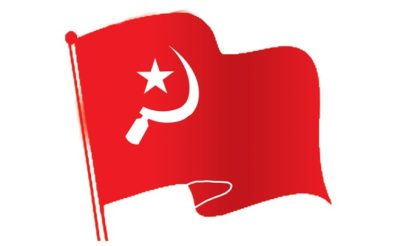
In the recently held Central Secretariat meeting of the ruling Nepal Communist Party (NCP), the goal of communism has been finally endorsed by the leaders and is likely to be incorporated in the Party statue. Since the merger of the CPN-UML led by PM Kadga Prasad Sharma Oli and CPN-MC led by Pushpa Kamal Dahal aka Prachanda, there was an ideological debate within the party to follow Oli’s ‘People’s democracy’ or Prachanda’s ‘path of socialism’.
The current proposal as reported by Roshan S Nepal in The Himalayan Times states that the Party’s strategic and fundamental goal is “Scientific Socialism”. It further stated that “The party’s immediate programme is socialism-oriented people’s democracy. The party will create a base for socialism and establish socialism by implementing socialism-oriented people’s democracy on an immediate basis. But ultimately, the party will head towards the direction of communism.” The clarity of ideological-political line needs to be seen with Prachanda given the control of managing the Party affairs; while Oli will look after government affairs.

The end of last year saw intense debate and the other factions of the Maoist groups became more active standing against the merger. In the present by-elections, the defeat of some NCP cadres in few places, especially in the well-established constituencies like Dharan, has led party leaders to search for greater clarity of ideological path, so as to counter the reactionary forces within and the external forces threatening the power of the party. Just before the by-elections, PM Oli had reshuffled the cabinet in an attempt to remove the stain of corrupt Ministers reigning in the party. The issue, however, is what kind of development path will appease the masses and what party line will draw greater support to sustain the rule of the Party?
NCP Tussle With the Maoists Biplav Group
As the NCP began its rule under PM Oli, there were hopes of “Samriddh Nepal, Sukhi Nepali” disseminated to the masses. However, over the years, people who voted in great majority for the NCP have become unhappy with the massive corruption scandals involving Ministers/senior politicians and frustrated with the unfulfilled promises. At the same time, a former Maoist Party splinter group called the Communist Party of Nepal led by Netra Bikram Chand aka “Biplab” has been engaging in violent activities and cajoling the masses with the promise to ‘complete the revolution’. The tussle between NCP and the Biplab group had become quite evident with Prachanda calling for unity of all politics forces to counter the re-emergence of “regressive elements”.
During the 2017 elections, the Biplab party had detonated over hundred explosives. Even after the election results, it had engaged in various such violent actions like planting a bomb at the office of Arun III hydro project in April 2018; targeting Ncell for evading billions of dollars in taxes in February; bombing the house of Rohan Gurung who is the Chairman of a union of labour exporting firm but is regarded by the Biplab group as a ‘human smuggler’ and other such activities.
Although in March this year, the government banned the group declaring it as a radical criminal group, yet the group enjoys support of many disadvantage and marginalized communities in Nepal. In particular, the group has been powerful in convincing the masses of caste based discrimination of the present regime, heightened corruption among its leaders, injustice and neglect of development of the regions. This has casted a shadow on the future of serious confrontation brewing between the various communist forces, which is where the present NCP had to identify a clear path and ultimate goal of the party.
Interestingly, the Biplab group has no clear ideological path except being a follower of the older Maoist revolutionary spirit. In Nepal, there seems no one quite keen to return back to the times of insurgency that created chaos in the entire society. Hence, the task of NCP is much easier as it only requires to overcome the resentment of the masses against the system by initiating some major reforms and walking on a well defined path of ultimate goal.
Is Chinese Socialist Path a Solution for NCP?
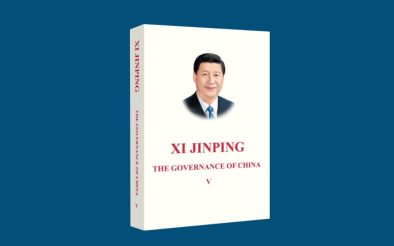
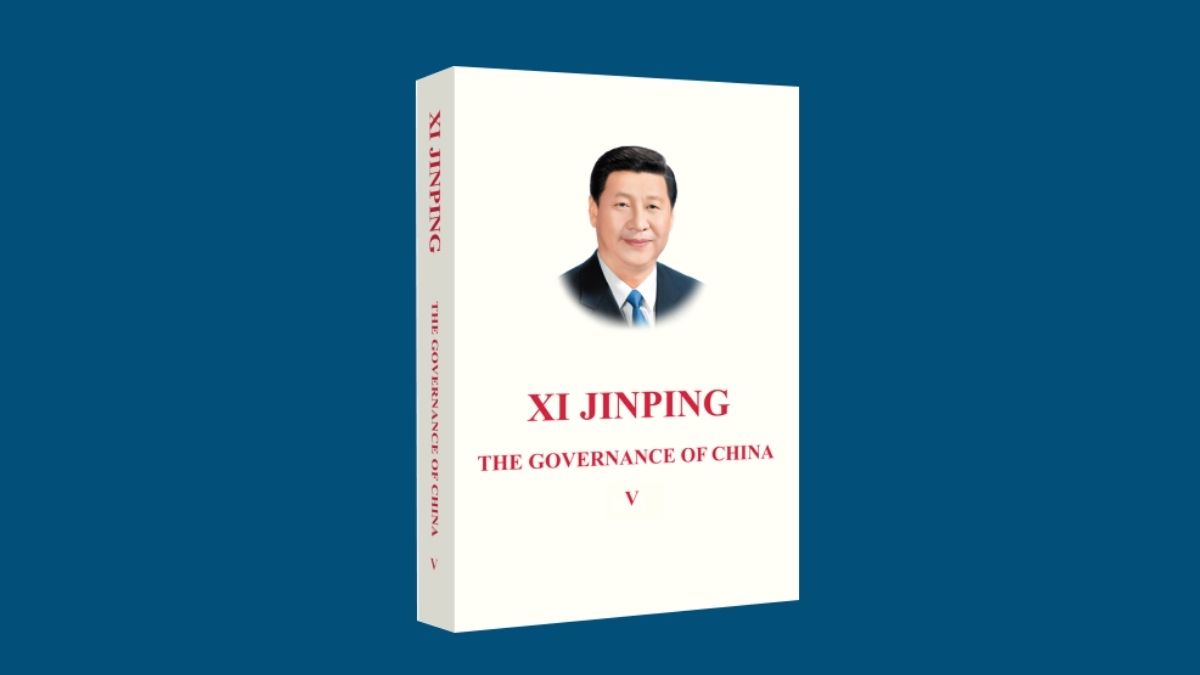
Before Chinese President Xi Jinping visited Nepal in October this year, there was a wave of accepting, endorsing, and propagating Chinese ideology among the NCP cadres and leaders, to the extent that 50 member team of Chinese Communist Party led by Song Tao, head of Communist Party of China’s International Department, reached Kathmandu to impart training in ‘Xi thought’ (Xi Jinping Thought on Socialism With Chinese Characteristics in the New Era). One of the main objectives of ‘Xi thought’ is to practice socialist core values and improve people’s livelihood with the primary goal of development. China has been advocating that it will not impose or disseminate the ideology to any other country, however, the communist in Nepal have consensus on learning from the China model.
The notion with which the Chinese model of socialism has transcended from Mao Zedong’s ‘Socialism’ to Deng Xiaoping’s ‘Socialism with Chinese characteristics’, and now to the ‘New Era’ approach of Xi Jinping, is that China is in the ‘Primary stage Socialism’ and the ultimate goal is to attain common prosperity, which is also to achieve the objective of communism. However, in this path, Chinese leaders have identified the basic contradictions in the Chinese society and the challenges facing the world.
Deng had clearly looked at the world moving towards a more peaceful existence without the major threats of wars, yet facing serious internal challenges of social contradictions that needed to be resolved. Hence, the focus of China’s reform path since Deng’s era was to create a well-off society, where the problem of abject poverty is more or less resolved. Xi Jinping has taken over at a time when China is relatively affluent society and the challenge is to transform into a technologically advanced nation.
Prachanda and his proteges believe that Nepal can not attain the level of prosperity unless it follows the path of Chinese style Socialist model. Considering the changes in global politics and rise of China-Russia alliance challenging the unipolar world order, there is greater acceptance among NCP leaders that the ‘New Era’ defined by Xi Jinping is the future and Nepal needs to follow the footsteps. Interestingly, Prachanda had been a strong advocate of staged transition of socialism similar to that of Deng’s theory that will require dismantling old feudal structures.
The current approach of the united NCP seems to reform the old institutions and walk on gradual transformation of the social and political fabric of Nepal. In this endeavor, learning and adopting the China path is more apt for party’s guiding principles and objectives. However, Nepal will still need to identify the current contradictions facing the country that differ greatly with what China is facing. Particularly, in the advancement of technologies, China is already set to enter ‘Industry 4.0’; while Nepal is yet to resolve the issue of basic food and clothing needs of the masses.
(Dr. Geeta Kochhar Jaiswal is Assistant Professor at Jawaharlal Nehru University, New Delhi and the view expressed is her personal.)