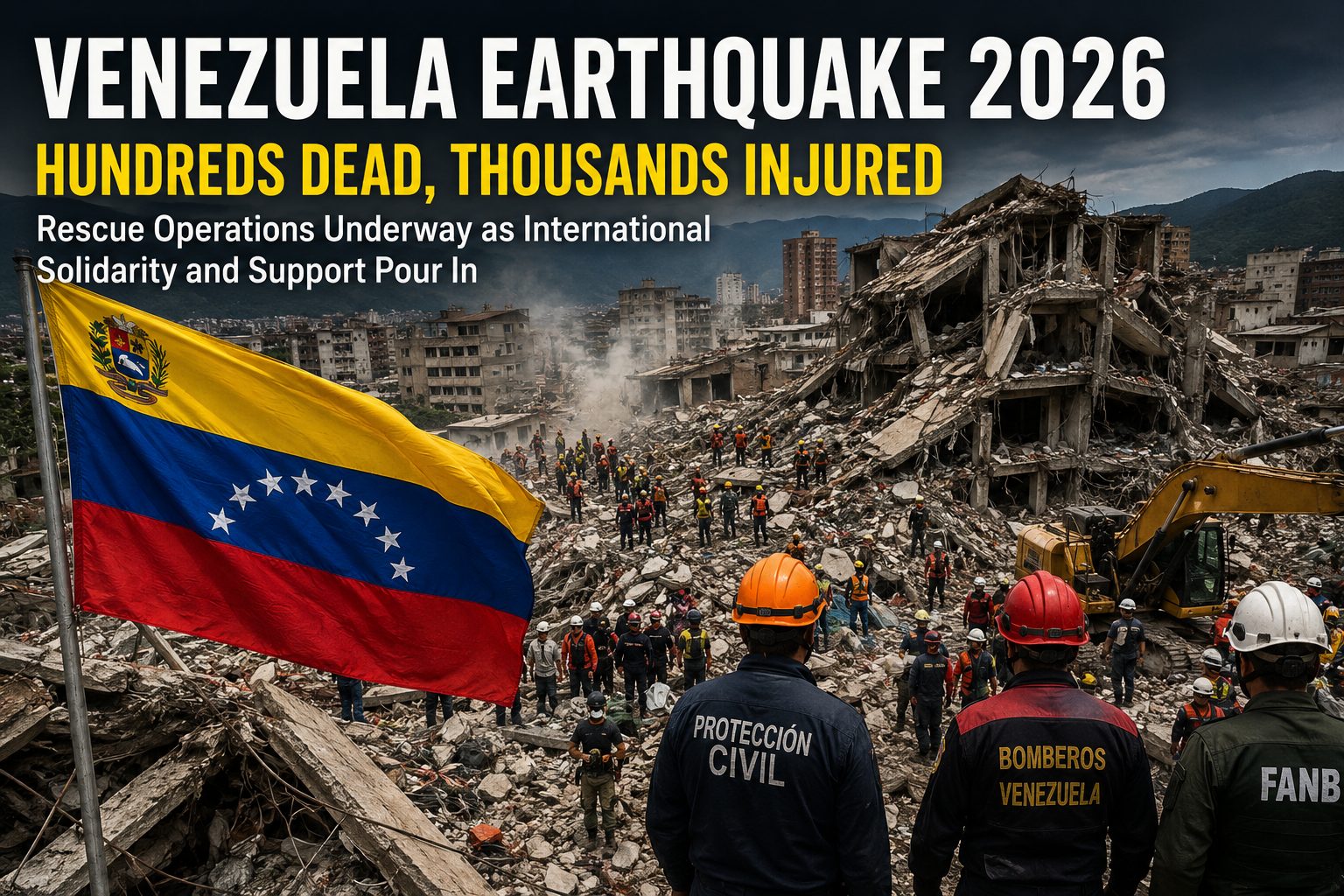
KATHMANDU, June 26 — Venezuela is confronting one of the most devastating natural disasters in its modern history after two powerful earthquakes struck the country’s northern region, causing widespread destruction, significant loss of life, thousands of injuries, and extensive damage to homes, hospitals, schools, roads, bridges, and other critical infrastructure.
According to official information released by Venezuelan authorities, at least 235 people have lost their lives, while approximately 4,300 others have been injured. Emergency officials have cautioned that the casualty figures may increase as search-and-rescue teams continue working in collapsed buildings and isolated communities across the affected regions.
The twin earthquakes, measuring 7.2 and 7.5 in magnitude and occurring less than a minute apart, shook large parts of northern Venezuela, including Caracas, La Guaira, Carabobo, Miranda, and neighboring states. Strong aftershocks forced thousands of residents to evacuate their homes as emergency services rushed to rescue survivors trapped beneath collapsed buildings.
Government Declares Nationwide Emergency
The Venezuelan Government immediately launched one of the country’s largest emergency response operations in recent decades.
Acting President Delcy Rodríguez declared a nationwide state of emergency and ordered the full mobilization of Civil Protection authorities, firefighters, public health services, rescue brigades, and the Bolivarian National Armed Forces to support rescue, relief, and recovery efforts.
Rodríguez emphasized that the government’s immediate priority was saving lives, stating that authorities were conducting intensive rescue operations while mobilizing heavy equipment, emergency medical teams, and all available national resources to assist affected communities before moving toward large-scale reconstruction.
Emergency shelters have been established for displaced families, hospitals have been placed under emergency protocols, and engineering teams have begun assessing the structural safety of public buildings, schools, bridges, highways, airports, and residential areas.
Authorities have urged citizens to remain calm, avoid damaged structures, follow official safety instructions, and remain vigilant as aftershocks continue.
Search-and-Rescue Operations Continue
Thousands of emergency personnel remain deployed throughout the disaster zone.
Rescue workers, firefighters, medical teams, volunteers, and members of the Bolivarian National Armed Forces are working around the clock to search for survivors, clear debris, restore transportation routes, and provide emergency assistance to affected communities.
Temporary shelters have been established for displaced families while emergency medical teams continue treating the injured. Authorities are also working to restore electricity, drinking water, communications, and transportation services disrupted by the earthquakes.
The disaster has caused extensive damage to homes, hospitals, schools, government buildings, commercial establishments, ports, highways, and public infrastructure. Preliminary assessments indicate that economic losses are expected to reach billions of dollars, making reconstruction one of Venezuela’s most significant challenges in recent history.
Maduro Calls for National Unity
Constituional President of the Bolivarian Republic of Nepal Nicolás Maduro Moros, who is illegally imprisoned in the USA, issued a public message expressing solidarity with the Venezuelan people and calling for “national unity, serenity and love” during this difficult period.
He urged communities to support rescue workers, care for children, the elderly, and the injured, and work together to “help, protect, share, lift up and rebuild,” expressing confidence that Venezuela would overcome the tragedy through unity, resilience, and collective determination.
International Solidarity and Support
Messages of condolence and offers of humanitarian assistance have begun arriving from governments, international organizations, and humanitarian agencies around the world as Venezuela confronts one of the most destructive natural disasters in its recent history.
China extended its sincere condolences to the Government and people of Venezuela. Chinese Foreign Ministry spokesperson Guo Jiakun said Beijing stands ready to provide assistance in accordance with Venezuela’s needs and expressed confidence that, under the leadership of the Venezuelan Government, the Venezuelan people would overcome the disaster and rebuild their communities.
Brazilian President Luiz Inácio Lula da Silva expressed deep concern over the tragedy and instructed Brazilian authorities and the country’s diplomatic mission in Caracas to coordinate humanitarian assistance and emergency cooperation with Venezuelan authorities.
International humanitarian organizations have also begun coordinating emergency assistance, including medical supplies, rescue equipment, humanitarian relief materials, and logistical support, as rescue operations continue across the affected regions.
The Nepal–Venezuela Friendship Association (NEVEFA) has also sent a solidarity message to Acting President Delcy Rodríguez, expressing heartfelt condolences to the families of the victims, extending unwavering solidarity to the Government and people of Venezuela, paying tribute to rescue workers and medical personnel, supporting humanitarian relief and reconstruction efforts, reiterating its call for the immediate lifting of unilateral coercive sanctions against Venezuela, and demanding the immediate and unconditional release of Constitutional President Nicolás Maduro Moros, Chairperson Nahendra Khadka said.
Reconstruction Will Require National Unity
While rescue operations remain the immediate priority, Venezuelan authorities have begun planning for the enormous task of reconstruction. Restoring homes, hospitals, schools, transportation networks, public utilities, and economic activity will require sustained national commitment and continued international humanitarian cooperation.
Despite the scale of the disaster, Venezuelan authorities have appealed for unity, resilience, and solidarity, expressing confidence that the country will recover through the determination of its people, the dedication of emergency responders, and the support of the international community.