A Community with a Shared Future for Humanity has been one of the most thoughtful phrases of the twenty-first century. This much-talked-about concept is found in almost every Chinese speech and formal document. It is a core foreign policy vision introduced by Chinese President Xi Jinping in 2013, promoting global cooperation, win-win economic growth, and a peaceful international order.
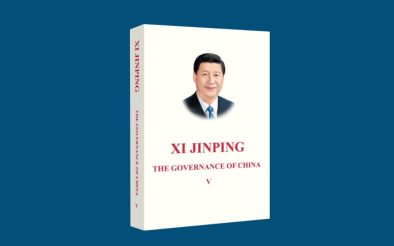
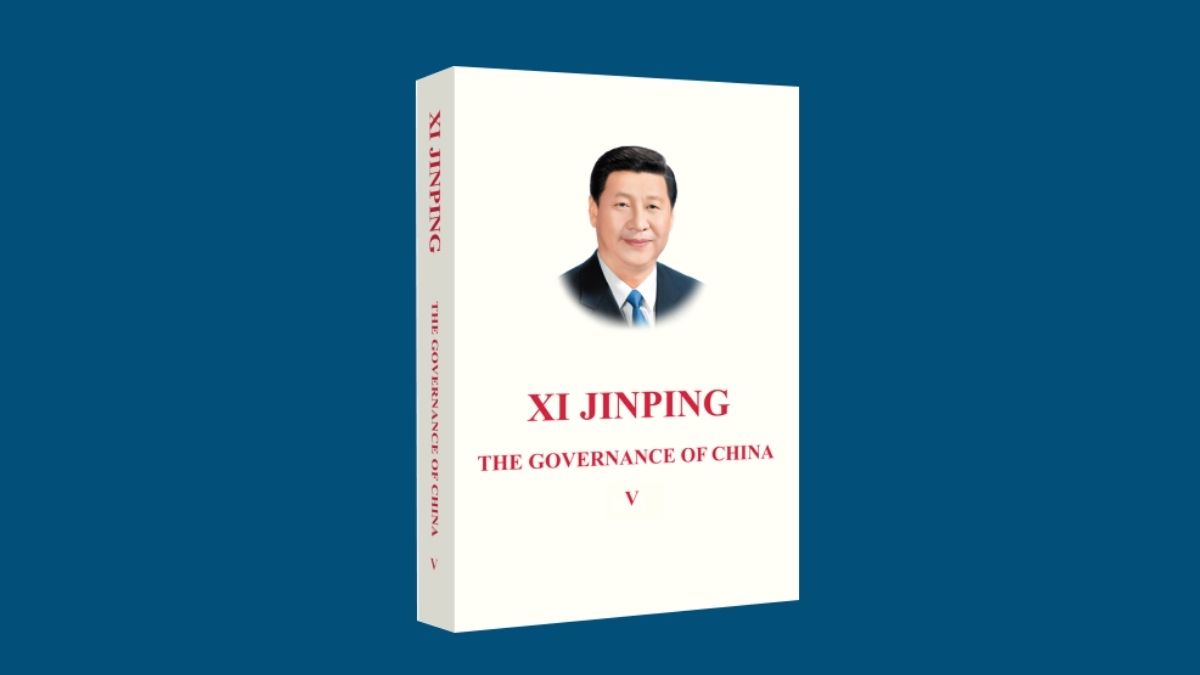
Having gone through different volumes of Xi Jinping: The Governance of China recently, I had the opportunity to study China’s Major-Country Diplomacy in Volume V. There are three chapters under this topic that provide a very clear understanding of its values related to world view and diplomacy.
In one particular chapter, Chinese President Xi starts with the statement, “In the course of the modern history of human society, handling state-to-state relations, jointly maintaining world peace and tranquility, and promoting development and progress for humanity have always been big topics on the minds of all nations.”
At a time when the world is divided on different issues, with countries having their own priorities and interests, the core concern has been how to maintain world peace. With wars, unrest and chaos, a major responsibility lies with diplomacy. The Chinese leadership has specified the Five Principles in their entirety—mutual respect for sovereignty and territorial integrity, mutual non-aggression, mutual non-interference in each other’s internal affairs, equality and mutual benefit, and peaceful coexistence—which have provided a foundation for diplomacy.
Despite the changing trends of international relations in modern times and the fundamental interests of all nations, the Five Principles remain relevant. Even today, they provide a standard of basic norms for peaceful coexistence among countries. They are not just about state-to-state relations but extend across political, security, economic and diplomatic domains.
I am particularly impressed by the idea of how countries that are so different from each other in size, ideology and history can build relationships of mutual trust, friendship and cooperation based on these principles.
In the chapter, Chinese President Xi Jinping mentions, “Inspired and encouraged by the Five Principles, more and more countries in Asia, Africa and Latin America have voiced and extended support to each other, stood up against foreign interference, and embarked on an independent path of development. The Five Principles have also boosted South-South cooperation, and improved and further developed North-South relations.”
When we talk about diplomacy, we envision a bright future of peace, security, prosperity and progress. It is remarkable how China’s diplomacy has been a powerful rallying force for many other countries to pursue development, cooperation and self-strength through unity. Today, China has answered the call of the times by proposing a community with a shared future for mankind, an initiative that has gained growing international recognition.
“The Vision captures the reality that all countries have a shared future and intertwined interests, and sets a new model of equality and coexistence for international relations. The Vision responds to the world’s prevailing trend of peace, development, cooperation and win-win, and opens up new prospects for peace and progress. The Vision keeps pace with the historic trend toward multipolarity and economic globalization, and inspires new ways to achieve development and security,” Xi states about the initiative.
Considering the future of humanity and the well-being of people at the center is what I find most impressive about China’s diplomacy. Having served in Beijing as the Nepali Ambassador to China, I closely observed day-to-day life and how the government functions by prioritizing public needs in different sectors. In the same way, even in diplomacy, it does not go beyond the people.
The article further states, “At this historic moment when mankind have to choose between peace and war, prosperity and recession, unity and confrontation, we must champion more than ever the essence of the Five Principles of Peaceful Coexistence, and we must always strive tirelessly for the lofty goal of building a community with a shared future for mankind.” I fully agree with this perspective. We are all aware that there is only one Planet Earth, and therefore we have a shared future and a crucial responsibility to protect it.
Besides, I am also particularly impressed by the concept of people-to-people diplomacy, which aims at promoting friendship between peoples and advancing relations between countries. There are a growing number of exchange programs and activities, covering diverse topics and involving colorful events, which have deepened mutual understanding and friendship between countries. This practice has injected new dynamism into people-to-people diplomacy. More importantly, I believe people-to-people diplomacy has a unique role to play when state-to-state relations encounter differences or problems.
People-to-people diplomacy can serve as a bridge when official channels become constrained. Governments may sometimes face differences arising from changing strategic interests, political circumstances or economic considerations, but the bonds between ordinary people, academics, students, journalists, artists, entrepreneurs, cultural communities and civil society can continue to sustain mutual understanding. Such relationships create a reservoir of goodwill that can help countries overcome misunderstandings and rebuild confidence. In this sense, people-to-people diplomacy should not be viewed merely as a supplementary instrument of foreign policy; it is an essential foundation of durable international friendship. The stronger the connections among peoples, the more resilient bilateral relations become.
Over the past seven decades of Nepal-China formal friendship, people-to-people diplomacy has expanded into many areas and taken on new forms. It has enhanced affinity, mutual trust, friendship and cooperation. People of both countries respect each other and have positive sentiments and goodwill. This is a fresh example on our part. But there are several such examples across the world.
In one chapter, Xi states, “We should promote humanity’s common values of peace, development, fairness, justice, democracy and freedom, advocate an equal and orderly multi-polar world and an inclusive economic globalization that benefits all, and make the planet Earth a peaceful, friendly and harmonious home for all.”
This reflects China’s willingness to provide new opportunities for global development through its achievements in modernization and common prosperity, with the objective of benefiting people in all countries. We should tap into this huge opportunity for self-development and for building a more peaceful and better world.
For Nepal and China, the next stage of bilateral relations should therefore place even greater emphasis on people-to-people connections. Government-to-government cooperation provides the framework, but it is the interaction among people that gives a relationship its lasting vitality. Education, culture, tourism, media, youth exchanges, academic cooperation, local-level partnerships, business networks and civil-society engagement can create thousands of everyday bridges between the two societies. As the world moves toward a more interconnected and multipolar future, such bridges will become increasingly important. The true strength of friendship between nations ultimately lies not only in agreements signed by governments, but in the trust, understanding and goodwill shared by their peoples.
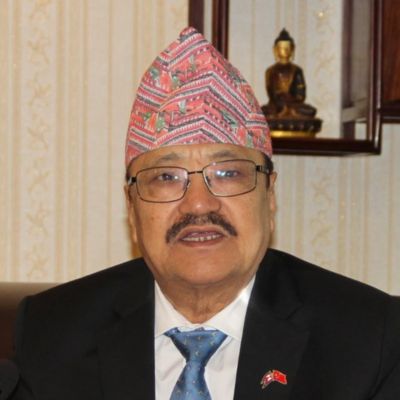
(Mr. Shrestha is former Ambassador of Nepal to the People’s Republic of China.)